





How to Start a Taxi Service in a Small Town and Grow It: Plan, Fares, Stands
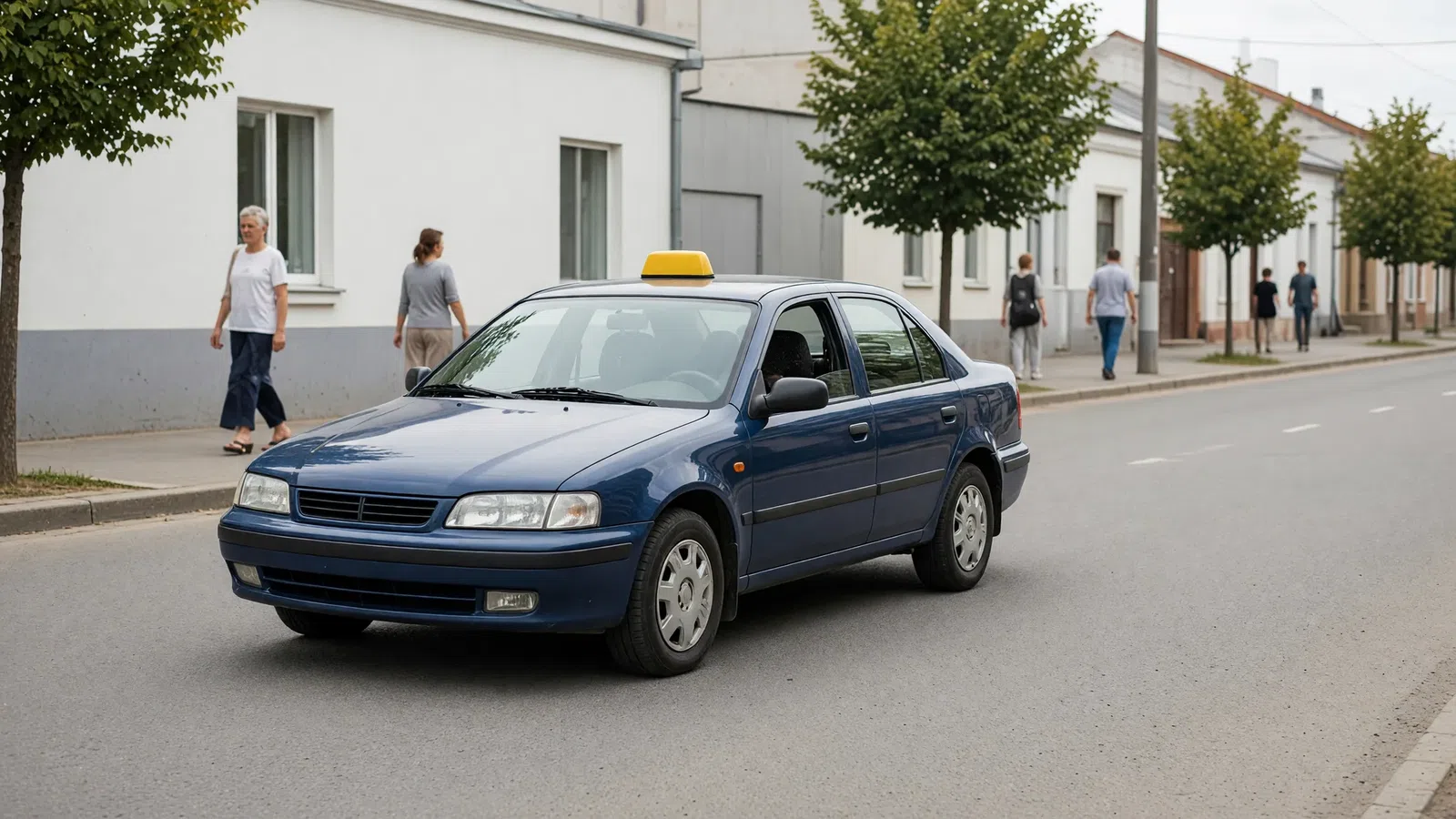
Starting a taxi service in a small town is easier than in a big city: there's less competition, trips are shorter, and word about a good service spreads fast. But mistakes show up just as fast: one week of long waits or "floating" prices, and customers go back to their old provider. In short, here's how to start a taxi service in a small town: choose a model (your own cars or drivers with their own vehicles), split the town into sectors, create simple, predictable fares with fixed prices for popular destinations, and build a base of regular customers from day one. Below we go through each step and show how to grow a small town taxi business without a big advertising budget.
What makes a small town taxi service different
Before you configure anything, it's worth understanding how a small town differs from a big city.
| Feature | What it means for the service |
|---|---|
| Lots of phone orders | You need a short, memorable number and a dispatcher who answers quickly |
| Regular customers | Loyalty and recognizing customers matter more than mass advertising |
| Short trips within town | The minimum fare matters more than the price per kilometer |
| Trips to villages, the station, neighboring towns | You need fixed prices and a separate out-of-town fare |
| Pronounced peaks (morning, evening, weekends) | You need flexibility: surcharges when cars are short, advance bookings |
| Few drivers | Every driver counts, so don't lose them to idle time |
| Reputation is everything | One bad trip gets discussed all over town |
How to start a taxi service in a small town: step-by-step plan
- Study the market. How many services already operate, what they charge, how long pickups take, what customers complain about. Call each one and book a couple of rides.
- Choose a model. Your own fleet requires investing in cars. A service that brings on drivers with their own cars is cheaper to start. In the second case the company earns from driver payments: a percentage per order or a per-shift fee.
- Register the business under your country's rules and check the requirements for passenger transport.
- Choose a phone number and software. The number should be easy to remember, and the software should take calls, calculate prices, dispatch orders and keep records.
- Split the town into stand sectors and zones.
- Set up fares. In-town, fixed destinations, out-of-town.
- Recruit your first drivers and agree on terms with them.
- Launch loyalty offers and your first promotions.
- Run test orders to every destination and only then announce the launch.
Taxi stands: how to divide a small town
In Tonotel a "stand" isn't a parking spot but a sector of the town drawn on the map. When a customer gives a pickup address, the system determines which sector it's in and offers the order to drivers in that sector's queue.
How to draw sectors:
- Divide the town along natural boundaries: a river, a railway, an industrial area, a major road.
- Sectors should border each other with no overlaps and no gaps. Otherwise an address falls into two sectors or none, and queue-based dispatch won't work.
- For a small town, 3–6 sectors are usually enough: the center, residential areas, the train or bus station, the industrial area.
- If you have out-of-town destinations, create larger zones for fares. Zones are for pricing, stands are for dispatch. They are different things, and one point in town can be in both a stand and a zone at the same time.
How drivers join the queue. A driver checks in at a stand in the app, or the dispatcher places them there by dragging with the mouse on the workstation. The order goes to the first available driver in the queue. If they don't accept it within the allotted time, it moves to the next one.
Dispatch chain. For each order type you set the order of rules. For a small town, this scheme works well:
- From the stand: to the first driver in the queue of the customer's sector.
- Nearest driver: a search within a radius by road, taking into account idle time, rating and group priority.
- Broadcast: all suitable drivers see the order, and whoever is quickest takes it.
Taxi fares for a small town
In a small town customers value predictability: "to the station is always this much". So fares should rest on three pillars.
In-town fare with a minimum charge
The minimum fare is the flag-fall price that already includes free kilometers, minutes and waiting time. In a small town most trips fit within the minimum, so the customer effectively pays a fixed price. Beyond the limit, a price per kilometer and per minute applies.
Fixed prices for popular destinations
In Tonotel this is done with transfers: a fixed price "from zone A to zone B". Create zones for the station, the hospital and nearby villages, and each destination gets its own clear price. A transfer for the return direction is created with a single button. A transfer applies to a two-point route: if the customer adds a stop on the way, the price is calculated by the regular fare.
Out-of-town and intercity trips
For trips outside town, set up a separate fare or zone rates: inside an out-of-town zone you can apply its own price per kilometer and a surcharge for the pickup or the return trip.
Illustrative fare table
| Fare or destination | How it's calculated | Illustrative price |
|---|---|---|
| In town, daytime | Minimum fare with included kilometers, then per km | 50 + 8 per km over the limit |
| In town, night | A separate fare active during night hours | 60 + 10 per km over the limit |
| Center → station | Transfer, fixed price | 70 |
| Town → nearby village | Transfer, fixed price | 150 |
| Intercity | Separate per-kilometer fare | 12 per km |
| Child seat, luggage | Option surcharge | +10 |
The figures are illustrative and only show the structure. Set real prices based on your market.
Additional tools:
- Time window and days of the week on a fare: night and weekend fares switch on automatically.
- Surcharges for options and requirements: a child seat, carrying a pet, large luggage.
- Conditional surcharges: for example, when there are few available drivers in a zone or many undispatched orders. You can also create a surcharge the dispatcher switches on manually, say, during heavy snowfall.
How to grow a taxi service in a small town
In a small town there's no point spending a lot on advertising. What works is service, recognition and customer retention.
Service people talk about
- Consistent pickup times. It's better to honestly say 10 minutes and arrive in 8 than to promise 5 and be late.
- Recognizing customers. When a regular customer calls, the system finds them by number and fills in their details on the order form, and the dispatcher sees their discount and bonuses.
- Notifications. An SMS or automatic callback with the car's make, color and plate number when the driver arrives.
- Post-trip ratings. A phone or SMS survey shows which drivers are dragging your reputation down.
Loyalty programs
| Tool | Example |
|---|---|
| Loyalty program | A discount on every 10th order or on a ride on the customer's birthday |
| Discount program | A regular-customer number issued automatically after a set number of orders or amount spent |
| Bonuses | Credits to a bonus account the customer uses to pay for future rides |
| Promo codes | A discount on the first ride or on orders during a promotion, with an activation limit and an expiry date |
| Referral program | A bonus for a regular customer who brings in a friend |
| Rewards | Achievements for rides: a certain number of orders, long trips, orders in a target zone |
Discounts don't stack: one applies by priority (promo code, then the customer's personal discount, then the loyalty rule). For each program you can specify what share of the discount is compensated to the driver. That way you decide who pays for the promotion: the company, the driver or both.
Corporate clients
Local businesses, hospitals, shops and hotels are a stable source of orders. In the system they are set up as accounts: the organization works on post-payment, has a balance and its own account portal, and its employees can be given ride vouchers.
Passenger app
Even in a small town some customers prefer to book from their phone: they see the car on the map, the price up front and their trip history. You can show company news and answers to common questions in the app.
How many drivers and cars you need
The most reliable way is to work from peak-hour demand:
- Estimate how many orders come in during the busiest hour.
- Estimate how long one order takes, including the pickup.
- Divide: you get the minimum number of cars on the road at peak.
- Add a buffer for weekends, sickness and holidays.
Illustrative example: 20 orders come in during the peak hour, and one order with pickup takes about 20 minutes, so one car can handle 3 orders an hour. You need at least 7 cars on the road, or about 9 with a buffer. The figures are illustrative: plug in your own.
An hourly order report will show you the real picture after just a couple of weeks.
Common mistakes at launch
- Fares that are too complicated. Customers should understand what they'll pay.
- Stand sectors that overlap. Orders go to the wrong drivers.
- No fixed prices for popular destinations. Customers compare and go where "the station is always the same price".
- Promotions without limits. Set an expiry date and a maximum number of activations for each promo code.
- Skimping on dispatchers. In a small town, a slow phone answer costs more than any advertising.
Frequently asked questions
Is a taxi business profitable in a small town?
It can be, if the town has no strong local service or customers are unhappy with the existing ones. The advantages of a small town are low competition, short trips and fast word of mouth. The limits are a small order volume and heavy dependence on reputation. Run the numbers with illustrative figures for your town before you invest.
How do I grow a taxi service in a small town?
Use one memorable phone number, keep pickup times consistent and prices predictable, launch a loyalty program (for example, a discount on every Nth order), promo codes and a referral program, work with local organizations as corporate clients, and collect ratings after trips.
What fares does a small town taxi need?
Usually a basic in-town fare with a minimum charge, fixed prices for popular destinations (the station, the hospital, nearby villages) and a separate fare for out-of-town and intercity trips are enough. If needed, add a night fare and surcharges for luggage or a child seat.
Does a small town taxi service need taxi stands?
In the system a stand isn't a parking spot but a sector of the town on the map. Even in a small town it helps to split it into several sectors: drivers queue up in their own area, and the order goes to whoever is closer and has been waiting longer.
How many cars do I need for a taxi service in a small town?
Work from peak-hour demand: how many orders come in per hour and how long an average trip takes including the pickup. That tells you how many cars need to be on the road at the same time. Start with a minimal team and add drivers when pickup times start to grow.
How much can you earn from a taxi business in a small town?
Nobody can honestly give an exact figure: it depends on orders per day, the average fare, your business model and your costs. For the owner the logic is: orders per day × average fare × the company's share (commission or driver shift fees) minus the cost of dispatchers, telephony, software and advertising. For a driver: orders per shift × average fare minus payments to the company, fuel and car maintenance. Plug in illustrative figures for your town, and after the first few weeks compare them with your order reports.
Summary
A small town taxi service rests on three things: fast pickups, clear prices and relationships with regular customers. Split the town into sectors with no overlaps, set fixed prices for popular destinations, plan out-of-town trips separately and launch loyalty offers from day one. Tonotel helps you bring all of this together in one system: stands and queues, fares with transfers and surcharges, customer programs, and reports that show what's working.